
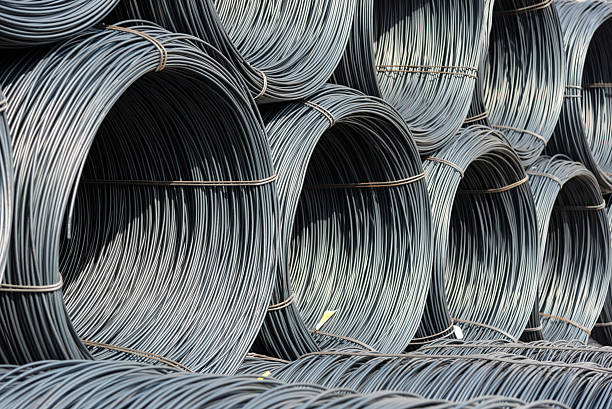
 The wire rod is a fundamental steel product used across a wide range of industries, from construction to manufacturing and fabrication. Produced through a hot-rolling process, wire rods are long coils of steel that serve as the base material for drawn wire products, reinforcing components and various engineered elements in industrial applications. Understanding the properties and uses of wire rods helps engineers and buyers make informed decisions that improve efficiency and performance in their projects.
For quality materials and accurate specifications, many professionals turn to suppliers that list products like wire rod, offering trusted steel solutions designed to meet industry standards.
What is Wire Rod and How is it Made?
A wire rod is produced by rolling billets through a series of rolling stands at high temperatures, resulting in a continuous coil of steel wire with a uniform cross-section. Once formed, these coils can be used directly in applications that require high strength and ductility or further drawn into thinner wires for specific purposes.
This manufacturing process combines heat and mechanical deformation to enhance the material’s structural properties, making wire rods strong enough to serve as raw material for shaping, bending or drawing into other wire products.
Key Applications of Wire Rod
The versatility of wire rod makes it an indispensable component in multiple sectors. In construction, wire rods are often used as reinforcement in concrete structures, where they are further processed into reinforcing bars, mesh and tying wire. Their strength and flexibility help enhance the structural integrity of buildings, bridges and other infrastructure projects.
In the manufacturing and fabrication industries, wire rods are drawn into wire products such as springs, nails, screws, bolts and fencing materials. These products require steel that can withstand repeated stress and deformation without losing strength, a characteristic that wire rods are well-suited to provide.
Advantages of Using Wire Rod in Industrial Applications
One of the main benefits of a wire rod is its high tensile strength, which allows finished products to bear significant loads and stress without deforming. The high-temperature rolling process also improves metallurgical properties, enhancing performance under demanding conditions.
Another advantage of wire rods is their adaptability. Because they serve as the base for many finished products, they can be processed to meet specific dimensional or strength requirements, making them highly flexible for engineers and manufacturers. This adaptability makes wire rods a standard choice for large-scale industrial production.
Selecting the Right Wire Rod for Your Needs
Choosing the appropriate wire rod involves evaluating several factors, including material grade, diameter and intended application. Higher grades of steel may be selected for products that require greater strength, while standard grades may be suitable for general reinforcement or basic fabrication tasks.
Compatibility with downstream processes is also important. For example, wire rods that will be drawn into finer wire products need to possess appropriate ductility to prevent breakage during drawing. Working with reputable suppliers ensures that the wire rod specifications match the performance expectations of your project.
Conclusion
In summary, a wire rod is a vital steel product with broad applications across construction, manufacturing and industrial fabrication. Its production through hot-rolling creates a material that is strong, versatile and ready for further processing into a variety of useful products. By understanding the properties and applications of wire rods, engineers and buyers can choose the right material for their specific needs, ensuring structural reliability and long-term performance in their projects.